

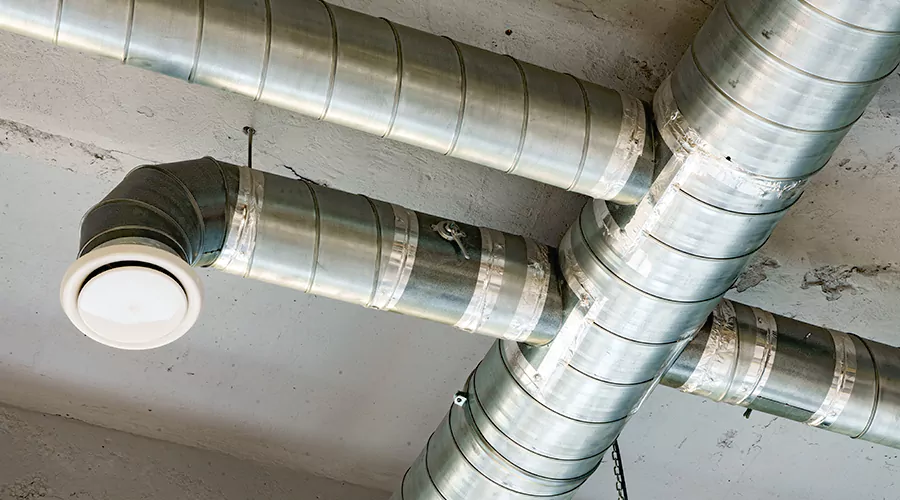
You can repair a hole in ductwork by sealing a small opening with HVAC-rated mastic or approved foil tape when the surrounding material is sound. Larger holes in rigid metal ducts generally need a properly secured metal patch before the edges are sealed. Torn flexible ducts may require replacement rather than a surface patch. Our air duct repair team addresses these openings before they affect system performance. In 2026, professional duct hole repairs commonly cost $200 to $600.
Air ducts distribute heated or cooled air throughout a home. When a hole develops, conditioned air can escape before reaching the intended room. A damaged return duct can also draw unfiltered air from an attic or crawlspace into the system. These problems can affect comfort and contribute to energy waste.
The correct repair depends on the material and extent of damage. A small puncture in rigid sheet metal requires a different approach from a torn flexible liner. Identifying the duct material and checking whether it remains structurally sound are necessary before selecting a patching method.
What Causes Holes in Air Ductwork?
Holes in ductwork develop when physical damage or corrosion creates an opening through the air-carrying material. Some openings result from poor installation, while others appear after years of exposure to moisture or mechanical stress. Understanding the cause helps determine whether patching will provide a lasting repair.
Physical Damage to Duct Sections
Ductwork installed in attics or unfinished basements can be damaged during storage or maintenance activities. Heavy objects may compress flexible duct material, while sharp tools can puncture the inner liner. Metal ducts may also develop dents or holes when struck by equipment.
A small puncture does not always require replacing an entire section. However, damage affecting the duct's shape or connection may require more extensive work. The surrounding material must remain strong enough to support a patch.
Corrosion in Metal Ductwork
Metal ductwork can corrode when moisture repeatedly contacts areas where protective coatings have deteriorated. Roof leaks and condensation are possible sources of unwanted water. Over time, corrosion may weaken the metal and create small openings.
A rusted hole requires more than simply covering the visible gap. If the surrounding metal has become thin or brittle, a patch may not remain attached. The affected section should be evaluated for replacement when corrosion extends beyond the immediate opening.
Damaged Flexible Duct Liners
Flexible ducts contain an inner liner that carries conditioned air and an outer jacket that protects insulation. Pulling the duct too tightly or allowing it to rub against sharp building materials can damage the liner. Excessive sagging may also place stress on duct connections.
A tear in the outer jacket does not always mean air is escaping. The inner liner must be examined to determine whether an actual duct leak exists. Patching only the exterior insulation covering will not repair a damaged inner air passage.
Poorly Secured Connections
Some apparent duct holes are actually gaps where two sections have separated. A loose branch fitting can leave an opening that releases more air than a small puncture. These defects often occur where ducts connect to collars or transition fittings.
Separated connections require mechanical attachment before sealing. Applying tape across a loose fitting may temporarily cover the opening without restoring the joint's strength. A lasting repair must keep the connected sections stable during normal system operation.
Damage From Pests
Rodents can sometimes enter accessible ductwork through existing openings or damage certain flexible materials. Nesting activity may leave debris and contaminated insulation around the affected section. This creates a different repair situation from an ordinary accidental puncture.
If pest activity is suspected, avoid handling contaminated material with bare hands or using an ordinary vacuum on droppings. The entry point must be identified so additional damage does not occur. Replacing the affected section may be necessary when the liner or insulation is extensively contaminated.
How Can You Identify the Type of Hole in Your Ductwork?
The first step in repairing a duct hole is identifying whether the damage affects metal or flexible material. A narrow opening at a joint may need sealing, while a larger tear can require mechanical repair or replacement. The condition of the surrounding duct is as important as the size of the hole.
Inspect safely accessible sections with the HVAC system switched off. Use a flashlight to locate the opening and examine nearby connections. Avoid pulling apart insulation or cutting into the duct before understanding how the material is constructed.
| Damage Type | Common Appearance | Possible Repair |
|---|---|---|
| Small hole in sound sheet metal | Localized puncture with firm surrounding metal | Approved mastic or suitable tape |
| Wider opening in rigid metal | Visible gap through an otherwise sound panel | Mechanically secured metal patch |
| Loose metal joint | Separation where duct sections connect | Reconnect and seal the joint |
| Torn flexible inner liner | Damaged air-carrying material | Approved repair or section replacement |
| Damaged outer flex jacket | Torn covering with possible insulation exposure | Restore jacket and insulation as specified |
| Extensive rust | Thin or crumbling metal around opening | Replace affected duct section |
| Crushed flexible duct | Flattened or sharply kinked passage | Correct support or replace damaged material |
The table describes possible responses rather than guaranteed repair methods. Material thickness and product requirements affect whether a patch is suitable. A duct with widespread deterioration may need replacement even when the visible opening looks small.
What Materials Are Used to Repair Duct Holes?
Air duct repairs use materials intended to remain attached under HVAC operating conditions. Approved mastic can seal suitable small gaps, while compatible foil tape can cover properly prepared seams. A large hole in rigid sheet metal usually requires a mechanical patch instead of relying on sealant alone.
HVAC Mastic Sealant
Mastic is a thick sealing compound applied to appropriate duct surfaces. It helps close small gaps and seams where the underlying material remains stable. Some products contain reinforcing fibers, while wider gaps may require a separate reinforcement method.
The surface must be prepared according to the manufacturer's instructions. Loose dust or deteriorating adhesive can prevent proper bonding. Mastic should not be treated as a structural repair for severely damaged metal.
Approved Metal-Backed Foil Tape
HVAC-rated foil tape can seal suitable openings when applied to compatible materials. The tape must bond firmly to the surface and remain intact during normal heating and cooling operation. Products identified for HVAC duct applications are preferable to ordinary household tape.
The tape should not be used to hold a disconnected duct together without mechanical support. It also cannot restore a crushed air passage. The physical condition of the connection must be corrected before sealing.
Sheet Metal Patches
Larger openings in rigid metal ducts can sometimes be repaired with a piece of compatible sheet metal. The patch covers the damaged area and is secured mechanically before its perimeter is sealed. This allows the repair to remain stable instead of relying entirely on adhesive strength.
A suitable patch should overlap sound surrounding metal. Sharp edges must be handled carefully because cut sheet metal can cause injuries. The patching method must avoid interfering with internal dampers or other airflow components.
Mechanical Fasteners
Sheet metal screws or other approved fasteners may be used to secure metal patches and compatible connections. Mechanical attachment helps prevent movement that could cause sealant to separate. The type of fastener depends on the duct material and construction.
Fasteners should not be installed blindly near concealed wiring or refrigerant lines. Penetrating the wrong component can create a more serious problem than the original hole. Safe access to both the repair area and surrounding equipment is necessary.
How Do You Repair a Small Hole in Metal Ductwork?
A small hole in sound metal ductwork may be repairable with an approved HVAC sealing product. This method is appropriate only when the surrounding metal is stable and the opening does not require structural reinforcement. The repair should prevent air leakage without altering the duct's shape.
Step 1. Turn Off the HVAC System
Switch off the heating or cooling equipment and wait for the blower to stop. Working on a stationary duct makes it easier to prepare the surface and apply sealing materials. Avoid opening furnace combustion compartments or electrical panels during the repair.
Check that the duct is safely accessible. Attics may contain exposed framing and unsafe walking surfaces. If reaching the hole requires disturbing concealed building materials, the repair may require a different approach.
Step 2. Inspect the Surrounding Metal
Examine the opening and determine whether the nearby metal is firm. A small puncture surrounded by sound material is more suitable for patching than a hole caused by widespread rust. Look for loose connections or deformation that may need correction first.
The repair should not begin until the actual damaged area is identified. A visible hole may be only one part of a larger deteriorated section. Photographing the opening can help document its initial condition.
Step 3. Prepare the Surface
Clean loose dust from the accessible area using a suitable dry method. Remove loose old sealing material without damaging the metal beneath it. The surface should be appropriate for the selected mastic or tape before application begins.
Follow the product's instructions for any additional preparation. Moisture and loose residue can interfere with adhesion. Avoid applying sealant directly over flaky corrosion because the material beneath it may continue deteriorating.
Step 4. Apply the Approved Sealant
For a small opening within the product's limits, apply HVAC-rated mastic or compatible foil tape according to the manufacturer's directions. The material should cover the opening and bond securely to the surrounding sound duct surface. Larger gaps may require reinforcement rather than additional layers of sealant alone.
Do not use ordinary cloth-backed duct tape as a permanent repair. Its adhesive can deteriorate under HVAC operating conditions. Approved materials provide a more suitable method when the duct itself remains structurally sound.
Step 5. Allow Proper Curing
Mastic may require drying or curing before the HVAC system is returned to normal operation. The required time depends on the product and surrounding conditions. Follow the label rather than assuming that every sealant is ready immediately.
Once curing is complete, inspect the repair and confirm that the covering remains attached. Any loose edges should be corrected before normal use resumes. A proper seal should not obstruct the internal passage.
Step 6. Check the Repair
Restore HVAC operation and observe the repaired section from a safe position. A previously noticeable stream of escaping air should no longer be present. However, a simple hand check cannot detect every small leak.
If the problem continues or several openings are present, further inspection may be necessary. A pressure-based leakage test can provide a more reliable measurement of duct airtightness than visual observation alone.
How Do You Repair a Larger Hole in Sheet Metal Ductwork?
Larger openings in sound sheet metal often require a mechanically secured patch because sealant alone may not bridge the gap reliably. The patch provides a solid surface over the damaged area. Sealing its edges then prevents air from escaping around the repair.
The repair commonly involves a compatible sheet metal patch attached to sound duct material. A 30-gauge sheet metal patch is one option used in residential duct repair guidance, although the correct material depends on the existing duct. The patch must overlap the opening enough to support secure fastening and perimeter sealing.
Metal cutting introduces sharp edges that require protective gloves and suitable tools. Fasteners must be positioned carefully so they do not interfere with internal duct components. The patch should preserve the duct's original airflow passage rather than protrude unnecessarily into it.
A large opening near a duct joint may require reconstruction of the connection instead of a simple patch plate. If the surrounding material is badly corroded or the duct is deformed, replacing the section can provide a more reliable result.
How Do You Repair a Hole in Flexible Ductwork?
Flexible duct repair depends on which layer is damaged. The inner liner carries air, while the outer jacket protects insulation. A tear in one layer does not necessarily mean the other layer has failed, so the damage must be identified before selecting a repair.
An inner liner torn near a fitting may require the connection to be restored using the duct manufacturer's approved attachment method. The liner must remain mechanically secured to the collar and properly sealed. Rewrapping only the outer insulation cannot correct an opening in the air-carrying passage.
Minor localized damage may be repairable when the manufacturer provides an approved method. However, extensive tears or crushed sections generally require replacement. Repeatedly applying tape over weak material can leave the duct vulnerable to another failure.
After the air-carrying section is restored, the insulation and outer jacket must also be returned to suitable condition. Proper support helps prevent the duct from sagging or pulling against its connections. A repaired flexible duct should maintain a smooth airflow path without sharp bends.
When Should You Replace a Damaged Duct Instead of Patching It?
Replacement is appropriate when a hole is surrounded by severely weakened material or when the duct can no longer maintain its intended shape. A patch depends on the surrounding material remaining strong enough to support the repair. If that material continues deteriorating, the opening may return or become larger.
Several conditions suggest that replacement may be more appropriate:
- Extensive corrosion has weakened the surrounding sheet metal.
- Several large openings exist within the same short section.
- Flexible duct lining has torn across a substantial area.
- A duct has collapsed or become severely crushed.
- Contaminated insulation cannot be restored.
- The connection has deteriorated beyond reliable repair.
- Previous patches repeatedly separate from the surface.
- The damaged section cannot maintain an appropriate airflow passage.
These conditions do not automatically require replacement of the entire duct system. Damage may be limited to one branch or short section. The replacement scope should reflect the actual material condition rather than assume that all connected ducts are defective.
What Mistakes Should You Avoid When Repairing Duct Holes?
Improper patching can leave a duct leaking or cause additional damage. The most common mistake is covering a visible opening without checking whether the surrounding material remains sound. Sealing products also have limits and should not be used as substitutes for structural repairs.
Avoid these mistakes:
- Using ordinary duct tape: Cloth-backed tape is not recommended for permanent HVAC sealing.
- Applying sealant to rusted material: Flaking metal may not support a durable bond.
- Ignoring a loose connection: A separated fitting must be secured before sealing.
- Patching only the outer flexible jacket: The inner liner may still leak.
- Using sharp tools inside sensitive duct materials: Flexible liners and fiberglass can be damaged.
- Blocking internal dampers: A patch must not interfere with airflow controls.
- Working near unknown wiring: Cutting or fastening blindly can damage concealed components.
- Patching combustion exhaust pipes: Furnace flues require separate materials and safety procedures.
The last distinction is particularly important. Heating and cooling ducts carry conditioned air, while furnace flues carry combustion exhaust. A repair method suitable for a supply duct should never be assumed safe for an exhaust vent.
How Much Does It Cost to Repair a Hole in Ductwork?
Professional duct hole repairs commonly cost $200 to $600 in 2026, depending on the size of the opening and the material involved. A small accessible hole is generally less expensive than a larger opening requiring a metal patch. Concealed damage and replacement work can increase the total.
| Repair Type | Estimated 2026 U.S. Cost |
|---|---|
| Minor sealing at a sound joint | $150 to $500 |
| Patching a hole or crack | $200 to $600 |
| Repairing flexible nonmetallic ductwork | $200 to $800 |
| Repairing sheet metal ductwork | $250 to $1,000 |
| Replacing a damaged duct section | $400 to $1,500 |
These estimates describe different scopes and should not automatically be added together. The final price depends on accessibility and whether the surrounding material needs additional repair. A concealed hole may also require opening and restoring nearby building materials.
When Should You Call an HVAC Professional?
Professional repair is appropriate when the hole is large or the surrounding material has deteriorated. Concealed ducts and significantly damaged flexible liners also require closer evaluation. These conditions may involve repairs that cannot be completed safely through ordinary household patching.
A qualified HVAC technician can determine whether the affected section remains structurally sound and select an appropriate repair method. The technician may also inspect nearby connections for additional leakage. When extensive sealing changes system pressures, airflow and combustion safety may need evaluation.
Professional work is particularly important near fuel-burning appliances. A hole in a furnace exhaust pipe is not a standard air duct repair and can create a dangerous combustion gas leak. Suspected damage to combustion venting should be treated as a safety problem rather than patched with ordinary HVAC tape.
How Can You Prevent Holes From Developing in Ductwork?
Preventing duct damage involves protecting exposed sections and maintaining secure connections. Many holes result from physical contact or repeated stress on unsupported material. Regular inspection can reveal small defects before surrounding duct sections become extensively damaged.
Protect Exposed Duct Sections
Avoid placing heavy storage items on flexible ducts or stepping on ductwork while accessing an attic. Physical pressure can damage the inner liner or loosen connections. Keep sharp tools and construction materials away from exposed duct surfaces whenever possible.
Maintain Proper Supports
Flexible ducts need suitable supports that prevent excessive sagging. Poor support can pull against fittings and eventually damage the liner near a connection. Check visible supports during seasonal HVAC maintenance and record sections that appear compressed or displaced.
Watch for Moisture and Corrosion
Inspect accessible metal ducts for recurring condensation or water staining. Persistent moisture can damage coatings and contribute to corrosion. Correcting the water source helps preserve the surrounding material and reduces the risk of another hole developing.
Inspect After Renovations
Home improvement work can disturb concealed ducts or damage exposed sections. Check accessible ductwork after major construction activity and compare airflow in nearby rooms. A sudden change in performance may indicate that a connection or duct section was damaged during the project.
Conclusion
Repairing a hole in ductwork requires identifying the damaged material and choosing a method that restores an airtight passage. Small openings in sound metal may be sealed, while larger holes often need a secured patch. Extensive corrosion and torn flexible liners may require replacement. Repairs should not interfere with airflow or combustion safety. This week, inspect accessible duct sections for damage before small defects become larger problems.